Why Am I Losing My Hair? It’s Not Always What You Think.
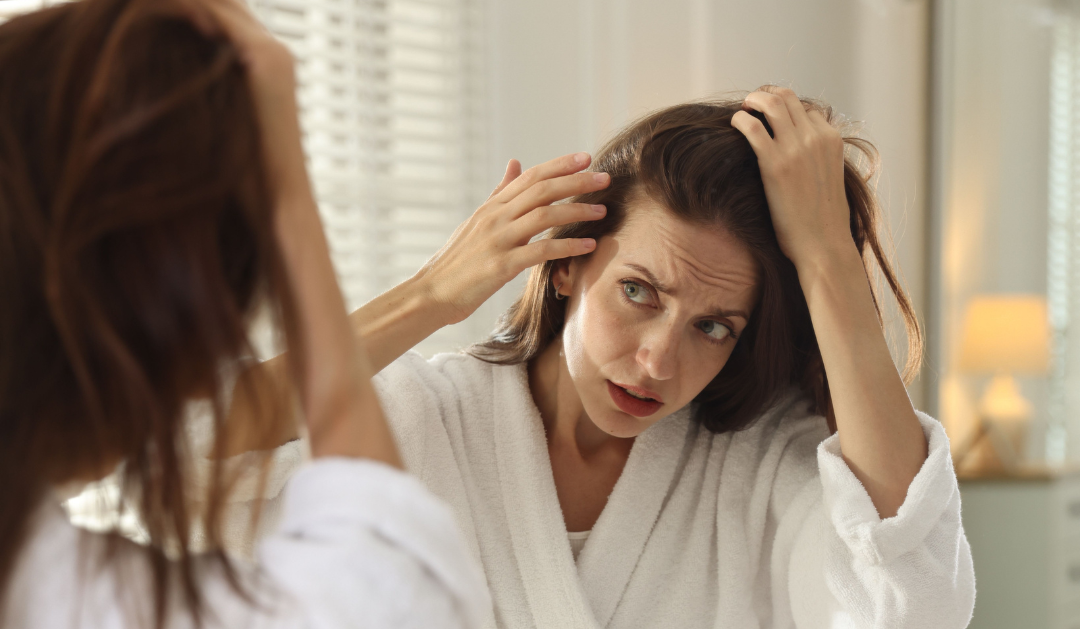
Maybe your ponytail feels a little smaller than it used to.
Maybe you're seeing more hair in the shower. Your part seems wider. Your hairline looks different in photographs. Or maybe your stylist was the first one to notice.
However it happens, realizing that your hair is changing can be unsettling. And usually, the first question is pretty simple:
Why is this happening?
Unfortunately, the answer isn't always simple.
Hair loss isn't one condition with one cause—and that's one of the biggest reasons treating it can be so confusing. Genetics can play a role, but so can hormones, stress, pregnancy, rapid weight loss, medications, the health of your scalp and even the way you style your hair.
Sometimes, more than one thing is happening at the same time.
That's why we think the first question shouldn't be “What should I buy?”
It should be “Why am I losing my hair?”
Stress: Your Hair May Be Keeping Receipts
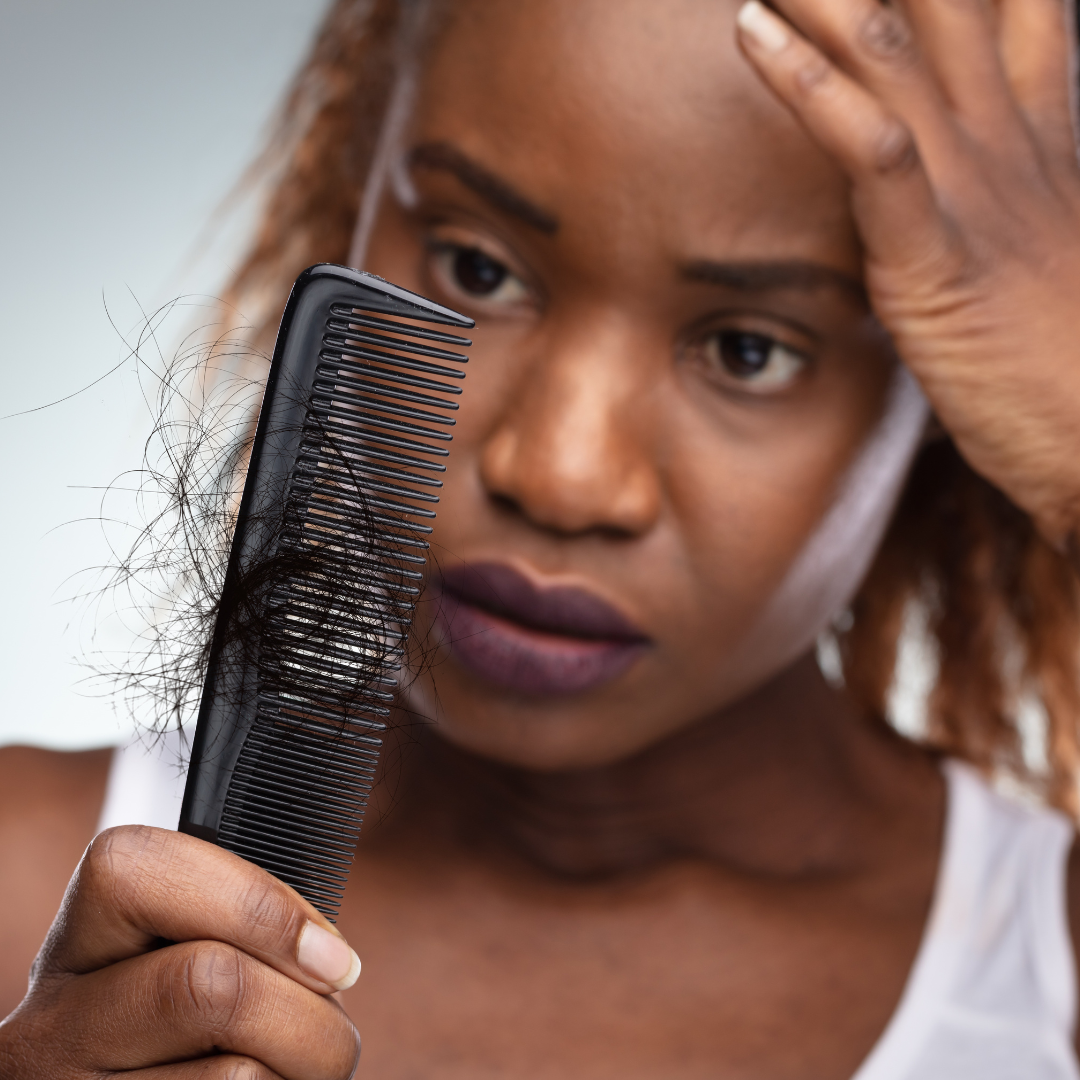
Here's one of the strangest things about hair loss: what you're seeing today may have started months ago.
Physical or emotional stress can disrupt the normal hair-growth cycle and cause a larger-than-usual number of hairs to enter the resting phase at the same time. Eventually those hairs shed—a condition known as telogen effluvium.
The tricky part is the delay.
A significant life event, illness, surgery, high fever, major emotional stress, rapid weight loss or another major stressor can occur, and the increased shedding may not become obvious until a couple of months later.
By then, you may have completely stopped connecting the two.
So if you're suddenly finding considerably more hair in your brush or shower, it's worth asking yourself:
What was happening in my body—and in my life—a few months ago?
Genetics: Sometimes It's in the Family
Genetics is one of the most common contributors to progressive hair thinning.
And in women, genetic hair loss doesn't necessarily look like the baldness pattern we commonly associate with men.
It may be much subtler.
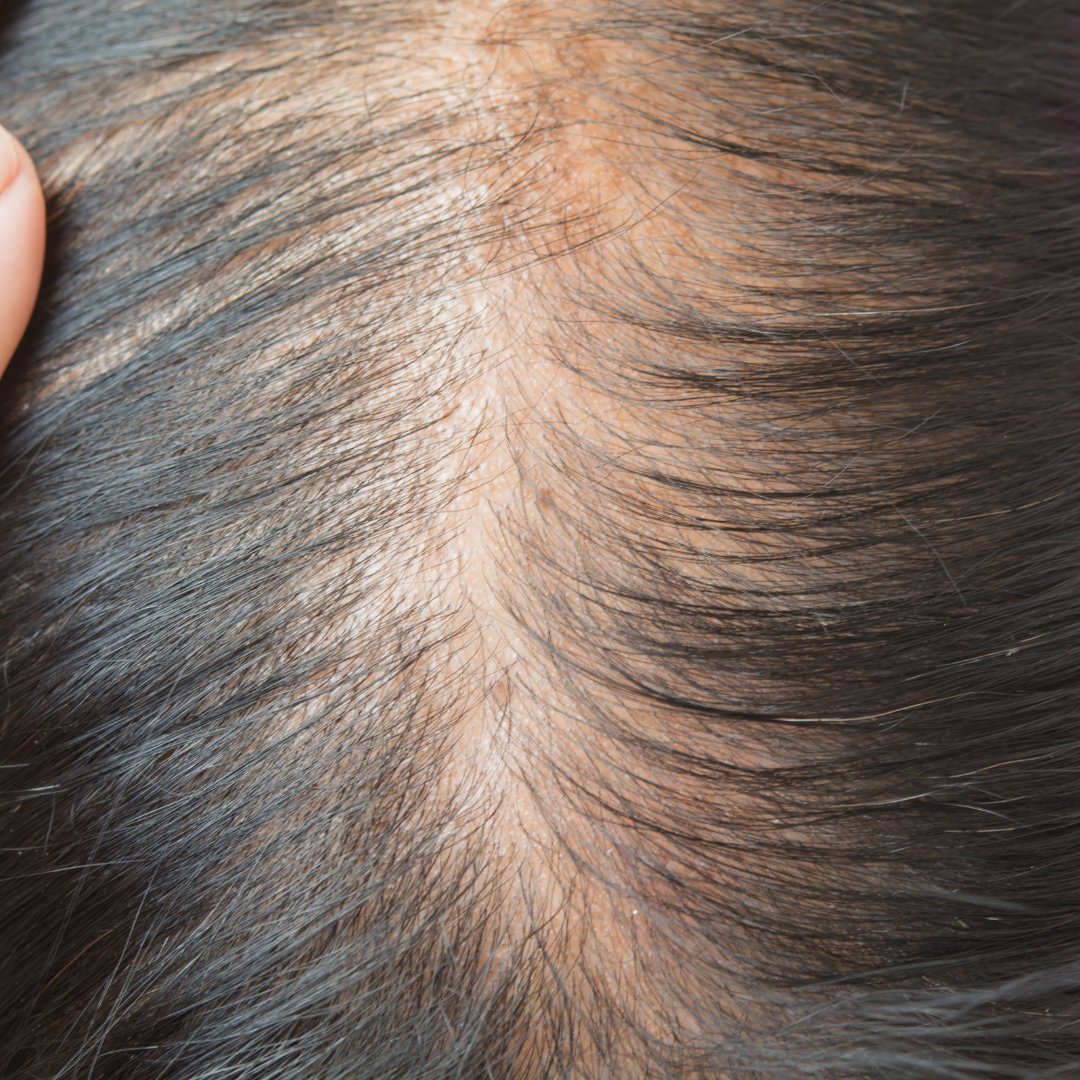
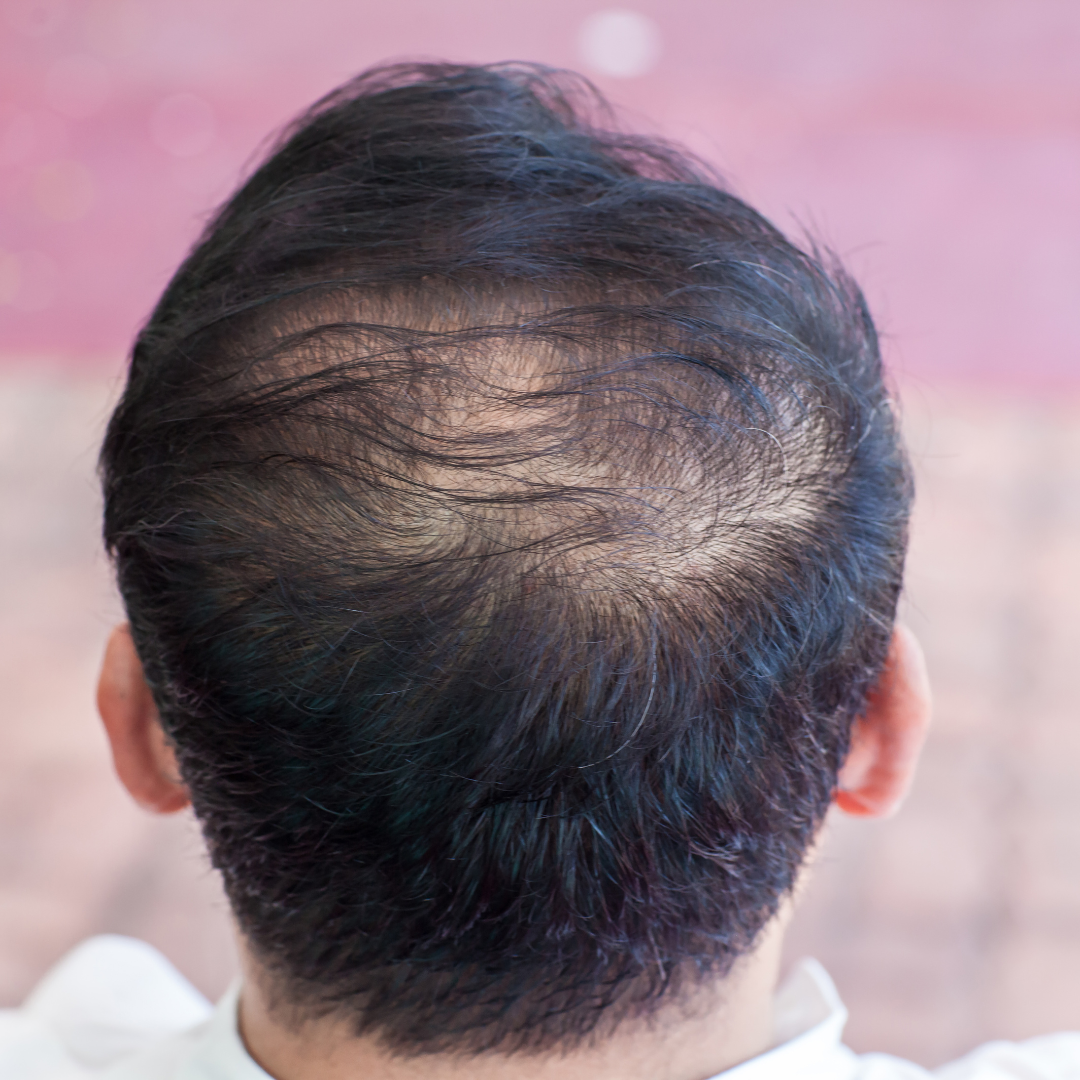
Your part gradually becomes wider. Your ponytail gets smaller. You can see a little more scalp under bright lights. Individual hairs may become finer, and the overall density of your hair slowly decreases.
Because these changes can happen gradually over years, they can be surprisingly easy to miss at first.
You may also have inherited a tendency toward hair thinning even if your mother or father still has a full head of hair. Genetics are more complicated than simply looking at one parent and predicting what will happen to you.
GLP-1 Medications: Is It the Medication—or the Weight Loss?
With the tremendous rise in medications such as semaglutide and tirzepatide, we're hearing this question more and more:
“Is my GLP-1 making my hair fall out?”
The answer deserves some nuance.
Hair shedding has been reported by some people using GLP-1 medications, particularly during periods of significant or rapid weight loss. But that doesn't necessarily mean the medication itself is directly damaging the hair follicle.
Rapid weight loss can be a major physiological stressor. A substantial reduction in calories, inadequate protein intake or nutritional deficiencies may also contribute to shedding in some people.
In other words, the body has undergone a significant change—and sometimes the hair-growth cycle responds.
There is still a lot that we do not know about how GLP-1 medications affect the body and hopefully in the years to come, we will better understand the connection to hair loss. However, it is undeniable that there is a connection, as we see it every day in our aesthetics practice.
Perimenopause & Menopause: Yes, Your Hair Can Change Too
We talk a lot about what menopause does to our skin.
We don't talk nearly enough about what it can do to our hair.
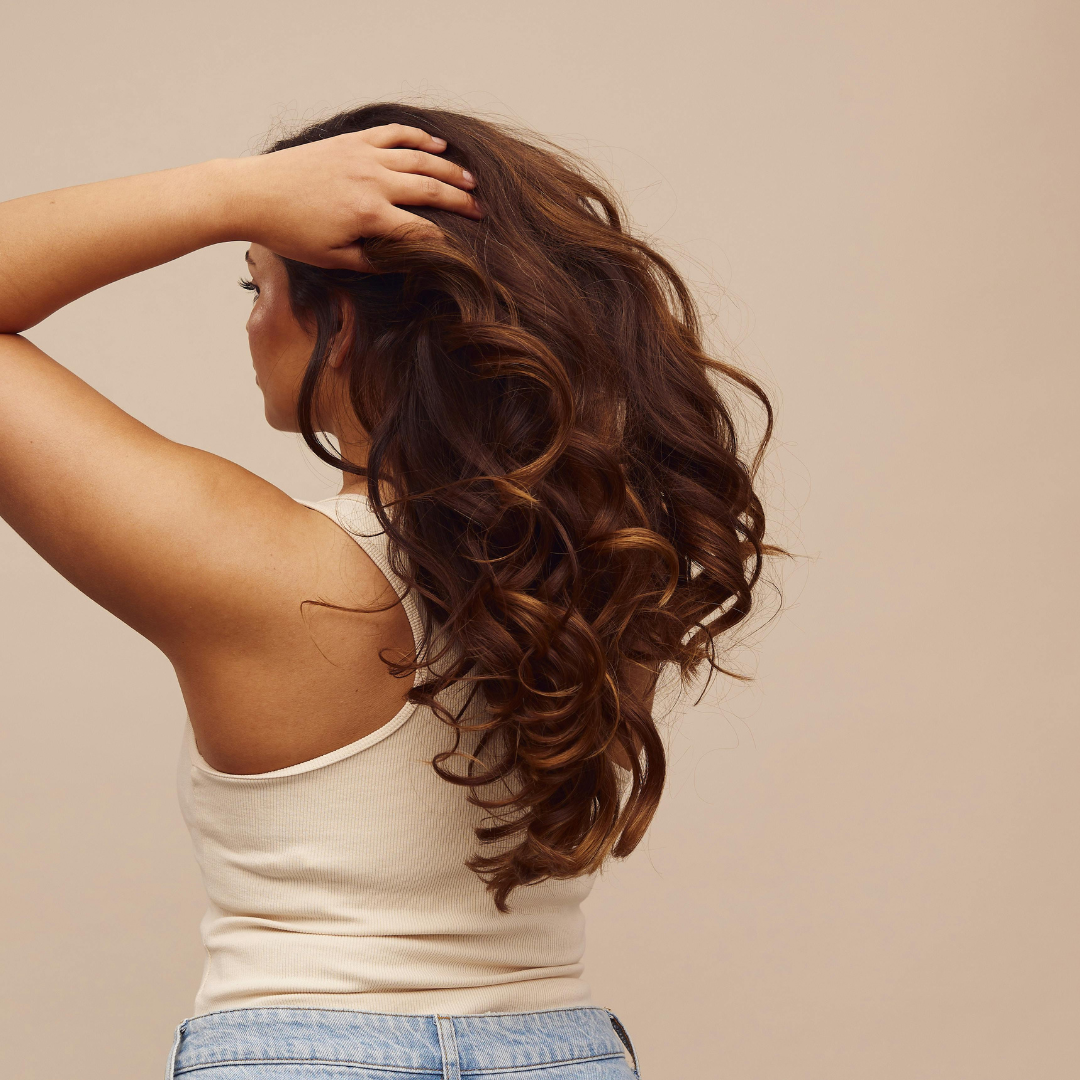
During perimenopause and menopause, changing hormone levels can affect the hair-growth cycle, the diameter of individual hairs and overall density. Some women notice a widening part, less volume, a thinner ponytail or changes around the hairline.
And because these changes often occur at the same time as other things—stress, sleep disruption, dietary changes, thyroid issues, medications and normal aging—it isn't always easy to identify one culprit.
If you're in your 40s, 50s or beyond and thinking, “My hair just isn't what it used to be,” you're certainly not alone.
But “it's just menopause” shouldn't automatically be the end of the conversation.
Pregnancy & Postpartum Hair Loss: What's Going On?
Pregnancy provides a fascinating example of just how much hormones can influence the hair-growth cycle.
During pregnancy, many women notice that their hair seems thicker and fuller. Hormonal changes can keep more hairs in the growing phase for longer than usual, so fewer hairs are shed.
Then comes the postpartum period.
As hormone levels shift again, many of those hairs move into the shedding phase around the same time. The amount of hair coming out can feel downright alarming.
The important distinction is that postpartum shedding is different from many forms of progressive hair loss. In many women, it's temporary and gradually improves as the normal hair cycle reestablishes itself.
Still, persistent, severe or unusual hair loss after pregnancy deserves a conversation with a healthcare provider.
Scalp Hygiene: Don't Forget Where Hair Actually Grows
We spend enormous amounts of money taking care of the hair we can see.
But healthy hair begins underneath it—at the scalp.
Your scalp is skin. It produces oil, sheds dead skin cells, sweats and accumulates styling products and environmental debris. It's also home to a complex natural microbiome.
When scalp care isn't appropriate for your individual needs, you may experience excessive oiliness, dryness, flaking, itching, buildup or irritation.
That doesn't mean that simply “deep cleaning” your scalp will reverse genetic or hormonal hair loss. Scalp hygiene isn't a cure for every type of thinning.
But maintaining a clean, comfortable and healthy scalp environment is an important—and often overlooked—part of caring for your hair.
Hair Practices & Breakage: Are You Losing Hair—or Breaking It?
Not everything that looks like hair loss is actually hair loss from the follicle.
Sometimes, the hair is breaking.
Years of bleaching, chemical processing, high heat, extensions and repeated mechanical stress can weaken the hair shaft. Tight ponytails, braids and other styles that repeatedly pull on the follicle can create another problem known as traction alopecia.
Take a look at the hair you're seeing.
Long strands coming out from the root tell a different story than lots of shorter, broken pieces around the hairline or throughout the length of the hair.
And that's an important distinction—because the solution for hair breakage isn't necessarily the solution for hair shedding.
Hair Loss Is a Clue. The Question Is What It's Telling You.
This is why we're hesitant whenever someone asks us, “What's the best thing for hair loss?”
There isn't one answer.
The woman experiencing temporary shedding after a stressful event isn't necessarily dealing with the same thing as the woman whose part has gradually widened over ten years.
A woman three months postpartum isn't necessarily experiencing the same thing as someone losing weight rapidly on a GLP-1 medication.
And a person with scalp inflammation or significant breakage may need something entirely different.
Sometimes hair loss warrants evaluation by a dermatologist or another medical provider. Sometimes laboratory testing may be appropriate. Sometimes several factors are contributing at once.
Understanding the “why” is what helps you make better decisions about what comes next.
So…What Can You Actually Do About It?
That's where we're going next.
On Thursday, October 22, we're hosting OH, HAIR YEAH! at EB Skin—an intimate educational event devoted to understanding hair loss and the options available today.
We've intentionally started this conversation with the causes because we don't believe the answer to hair loss is simply buying the latest supplement, serum or gadget someone showed you on Instagram.
At the event, we'll move beyond the why and talk about what you can actually do next—including where medical treatments, nutrition, scalp health, stress management and newer technologies may fit into the bigger picture.
Our goal isn't to convince you that there's one answer for everyone.
It's to help you become a much more informed consumer of all the answers being offered to you.
Hair loss is complicated. Your next step doesn't have to be.
OH, HAIR YEAH!
Thursday, October 22
Doors open at 11:00 AM
Educational program begins promptly at 11:30 AM
EB Skin | Green Hills
Space is limited and advance registration is required.